Why cannabinoids are challenging to formulate
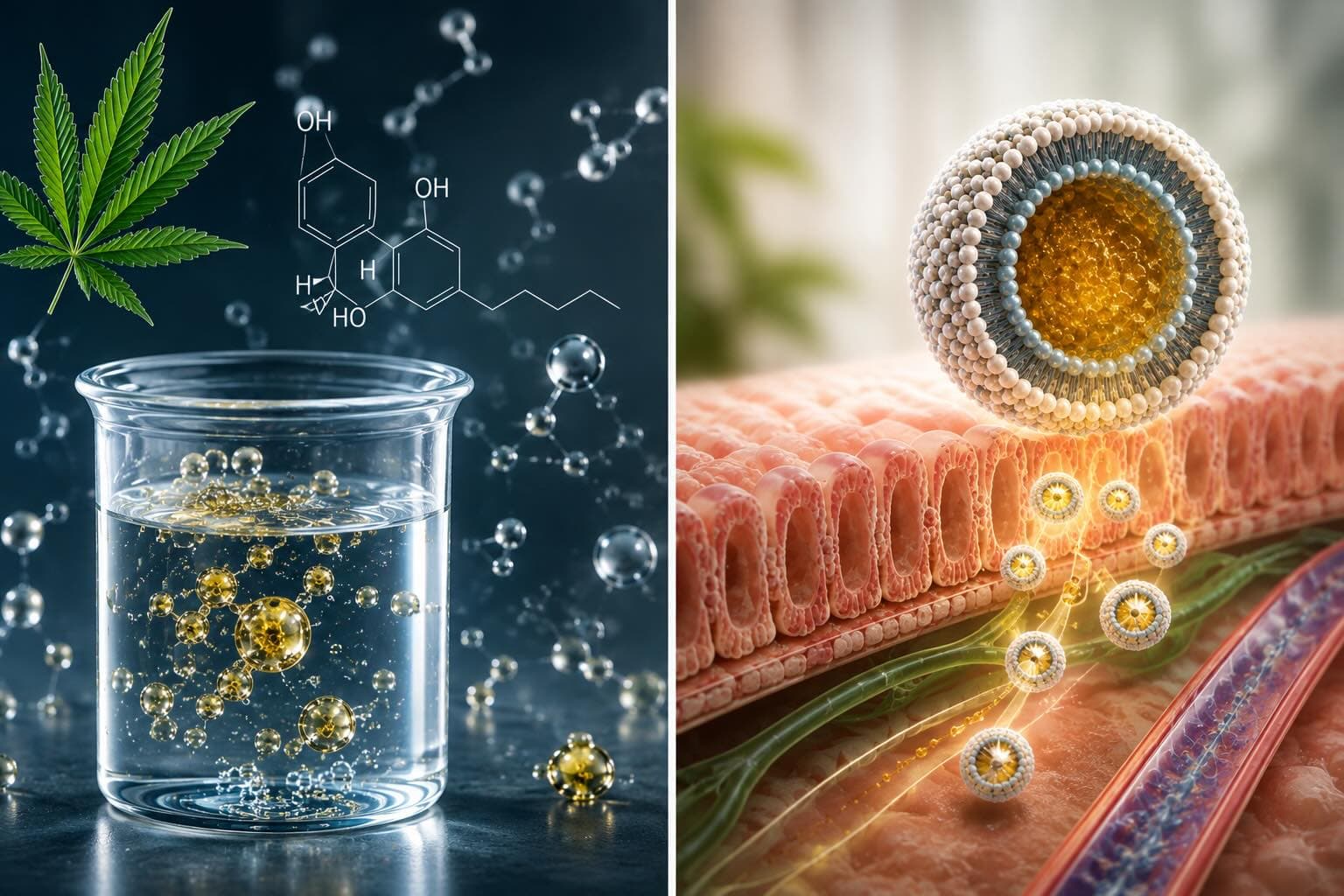
Cannabinoids such as CBD and THC are highly lipophilic. They dissolve well in fats but poorly in water, making efficient absorption difficult. Orally administered CBD has consistently been shown to have low absolute bioavailability, with clinical pharmacokinetic studies reporting figures around 6%. This means that the majority of an administered dose never reaches systemic circulation to exert a therapeutic effect.
As a result, manufacturers often face challenges including limited bioavailability, variable absorption, reduced formulation stability and inconsistent product performance.
Much of this variability traces back to extensive first-pass metabolism: orally ingested cannabinoids are absorbed into the hepatic portal system and routed through the liver before reaching general circulation, substantially reducing the concentration of intact active compound that becomes available to the body. These factors can make it difficult to deliver reliable and reproducible results.
- Limited bioavailability
- Variable absorption
- Reduced formulation stability
- Inconsistent product performance
Why formulation makes the difference
The performance of a cannabinoid product is determined not only by the amount of active ingredient it contains, but also by how effectively that ingredient is delivered. Advanced formulation technologies are designed to improve the protection, stability and delivery of cannabinoid actives, helping developers create more consistent products.
One of these technologies is the Nanostructured Lipid Carrier (NLC) platform. Encapsulating a lipophilic active within a lipid nanoparticle can support uptake via the intestinal lymphatic system rather than direct hepatic portal absorption alone. Because lymphatic transport bypasses first-pass hepatic metabolism, this pathway is associated with improved delivery of intact active compound into systemic circulation.
Looking beyond potency
For product developers, the focus is shifting from simply increasing cannabinoid concentration to improving overall formulation performance. Better delivery means a greater proportion of the active ingredient becomes available where it matters most. Potency on a certificate of analysis does not, by itself, guarantee therapeutic performance.
How TurgorTx supports better formulations
TurgorTx applies patented NLC technology specifically to address the formulation challenges associated with cannabinoids. Our platform helps medicinal cannabis companies, contract manufacturers and cannabinoid brands develop formulations designed for improved stability, consistency and performance.